UKR
UKR
Delivery and Service, Technologies and Water Quality
Why Your Water Cooler Is Leaking, Noisy, or Not Cooling: Main Causes and What to Do
Jun
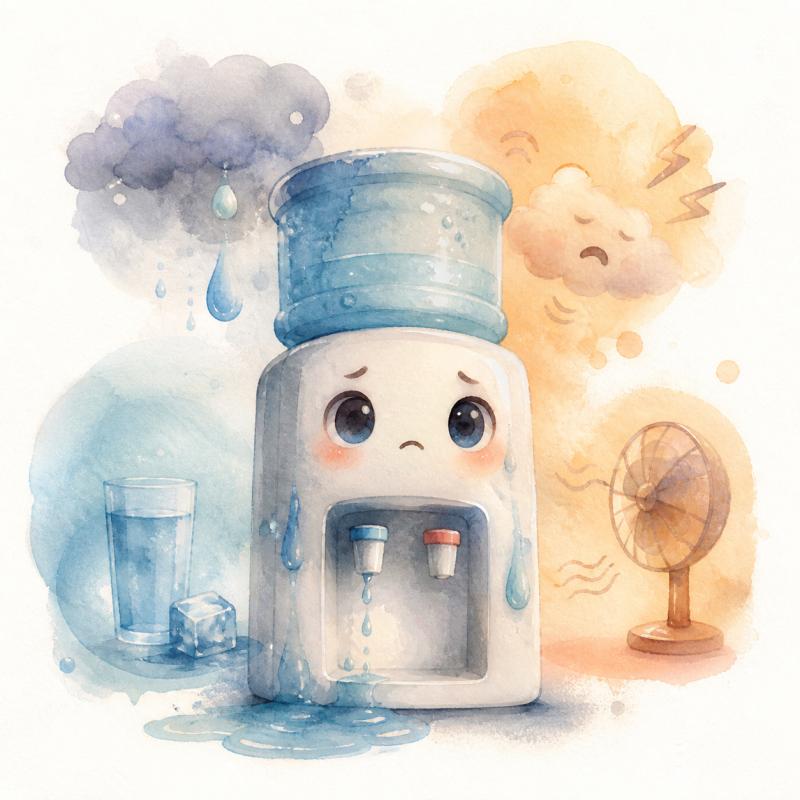
You walk up to the cooler for a glass of cool water and step in a puddle. Or at night you hear a suspicious buzzing from the kitchen that wasn’t there before. Or the water from the tap comes out barely cool, even though the “Cold” button seems to be on. Sound familiar? A water cooler is a living piece of technology, and sometimes it gives signals. The good news: most of these signals don’t mean the device is about to die. Let’s figure out what you can fix in five minutes and what calls for a service visit.
The Cooler Is Leaking: Where Is It Wet and Why
Rule number one: don’t panic. A puddle around the cooler is far from always meaning a cracked tank. Most often, the source of moisture is something external.
The bottle and its seat. Remove the bottle and check for cracks in the plastic, especially around the neck. Sometimes water leaks simply because the bottle isn’t seated evenly or the sealing ring on the cooler’s inlet has become dirty. Wipe the rubber seal with a damp cloth and reseat the bottle — often the problem disappears.
The tap or spout. After you fill a glass, a few drops may drip from the tap for a moment. That’s normal. But if the tap keeps dribbling half an hour later, there might be limescale or scale flakes inside, preventing the valve from closing fully. Carefully remove and rinse the tap, and check for cracks in the plastic at the same time. We wrote in detail about how to properly care for your cooler and avoid such surprises here: “Cooler Care: How to Keep It Odor-Free, Leak-Free, and Dispensing Only Clean Water”.
The drip tray. Sometimes it’s simply overflowing. If you haven’t removed and washed the drip tray in a while, water can splash out of it onto the floor. Check it — and wash it while you’re at it if there’s already any buildup.
Leaking from inside the body. Now, this is more serious. If water appears from the ventilation holes or from under the base, immediately unplug the cooler and drain the remaining water. Don’t attempt to open it yourself: you could damage the tubing or get an electric shock. In this case — straight to a service center.
The Cooler Is Noisy: What’s That Sound and Can It Be Tamed
A gentle hum from the compressor or a gurgle of refrigerant is completely normal for compressor models. But if the noise has suddenly changed, become louder, or is accompanied by vibration, it’s time to find the cause.
Uneven placement. The most common and harmless reason. Is the cooler standing on uneven tiles or on a carpet? The compressor vibrates, and that vibration transfers to the body. Check with a spirit level or simply rock the cooler with your hand. If it wobbles — place something under the foot and make sure all four supports are touching the floor.
Poor ventilation. A compressor cooler generates heat and needs to breathe. If you’ve pushed it flush against a wall or into a nook between cabinets, the ventilation grille can’t keep up, the fan spins faster and louder. Leave a gap of at least 10–15 centimeters at the back and sides — it will extend the life of both the compressor and your nerves.
Dust on the condenser. About every six months it makes sense to gently vacuum the back grille. Dust acts like a fur coat: it hinders cooling, causes the compressor to overheat, and makes it hum louder. But only do this with the cooler unplugged!
The Cooler Doesn’t Cool Well: Why Is the Water Barely Chilled
You pressed “Cold,” and the water is just a bit cooler than room temperature? Don’t rush to call a technician — there are three simple reasons you can address yourself.
First — the switch. Yes, it’s trivial, but sometimes the cooling switch on the back panel is accidentally moved during cleaning or when changing the bottle. Check its position. On some models, cooling is activated by a separate button on the body — make sure it’s lit.
Second — ventilation and overheating. If the back grille is clogged with dust or the cooler is standing in a tight corner, the cooling system can’t dissipate heat efficiently. The result — the water doesn’t chill. The solution is the same: pull it away from the wall and clean the grille.
Third — increased demand. In an office or at a home party, when hot water is drawn every two minutes and cold water every minute, the tank simply can’t cool down to the right temperature fast enough. Give the cooler a half-hour rest, and the chill will return. But if you’re home alone and there’s been no cold water for several hours — the issue is likely internal, and you’ll need professional help.
What You Can Check Yourself in Five Minutes
Let’s put it all into a short checklist. Before panicking, run through these points:
- Is the cooler standing level? (give it a gentle shake)
- Is the cooling/heating switch in the correct position?
- Is there at least a hand’s width of clearance at the back?
- Is the ventilation grille free of dust?
- Is the bottle seated evenly, the neck clean, and are there no cracks?
- Is the drip tray not overflowing, and are the taps not dripping?
Half of all issues will be solved at this stage. If you’ve checked everything and the cooler still leaks from inside, sounds like a tractor, or absolutely refuses to cool — then it’s time for the professionals.
When You Need a Service: Red Flags
Don’t try to repair the cooler yourself if:
- The leak is coming from inside the body, not from under the bottle or a tap.
- You hear a sharp metallic knock or grinding from the compressor.
- Cooling does not return even after all checks and rest.
- There’s a smell of burnt plastic or wiring.
Internal work on the refrigeration circuit and electrics is the domain of trained specialists. DIY intervention can not only finish off the device but also void your warranty, if it’s still active.
A Quick Summary
A water cooler is a reliable thing, but it needs attention. If it suddenly leaks, gets noisy, or stops giving cold water, don’t rush out to buy a new one. Most often the culprits are uneven placement, a dust-clogged grille, an overflowing drip tray, or a misaligned bottle. You can fix these in minutes. And if it turns out the problem is internal — simply unplug the device and call a service.
Proper care and timely diagnosis extend your cooler’s life dramatically. And of course, it matters what water you put into it. Cascade water undergoes multi-stage purification, causes no scale, and leaves no residue — an ideal partner for any cooler. Order clean water delivery and let your cooler run quietly, stay leak-free, and gift you nothing but freshness. Browse all available models in our cooler catalog.