UKR
UKR
Ecology and Sustainable Development, Health and Hydration
Microplastics in Drinking Water: Where They Come From and How to Reduce the Risks
Aug
The word “microplastics” has been everywhere lately: in the news, in filter ads, in kitchen conversations. And along with it — a pile of scare stories, half-truths and marketing. Let’s sort it out calmly, without panic: what it actually is, where it comes from in water, and what you can really do at home.
Let me be upfront: this is a complex topic, and science hasn’t answered all the questions yet. So here I’ll honestly separate what’s confirmed from what’s still an open question.
What microplastics are and why there’s so much talk about them
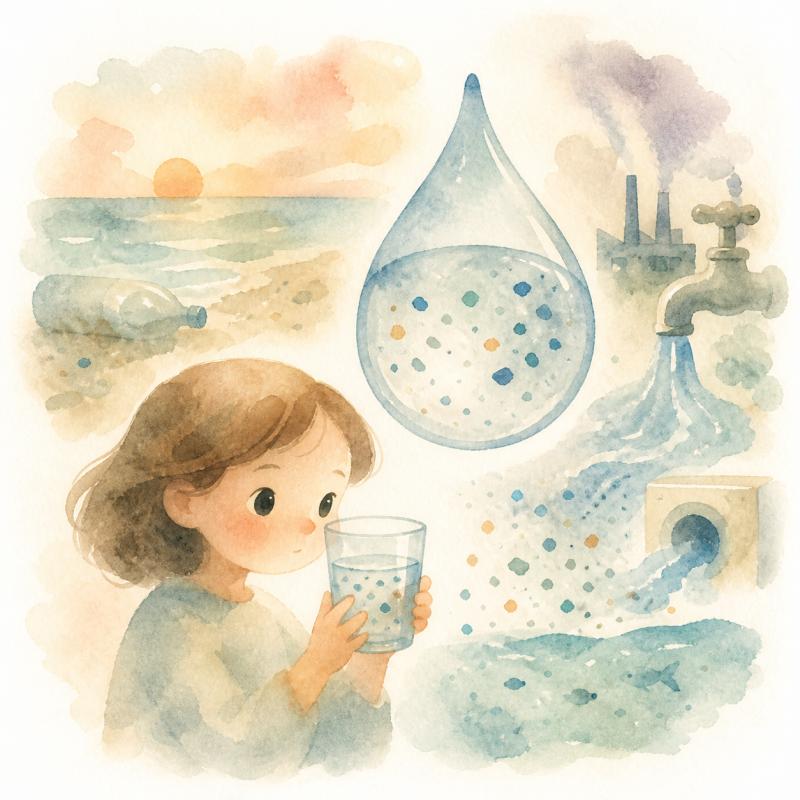
Microplastics are tiny pieces of plastic, usually smaller than five millimeters. To put it in perspective: that’s about the size of a sesame seed or even smaller. There’s also nanoplastics — truly microscopic particles you can’t see with the naked eye.
They appear in two ways. First, when a large piece of plastic gradually breaks down into small pieces. Second, when plastic is manufactured tiny from the start — for example, in cosmetics or cleaning products.
Why so much talk? Because microplastics are now found almost everywhere people look: in the ocean, in soil, in the air and, yes, in water. The question isn’t whether it’s somewhere — it’s how much it affects our health.
Where microplastics in drinking water come from
There are several routes, and it’s important to understand that water is far from the only — or the main — source.
Plastic particles can get into water from the environment — for example, from plastic waste breaking down in nature. But there’s a route closer to home: the packaging itself. Plastic bottles, especially if they’re heated or stored for a long time, can release microparticles into the water.
And microplastics enter the body not just through water. They’re in food packaging, in cookware, in cosmetics, even in the air we breathe. So when people say “just drink purified water and you’ll be healthy” — that’s an oversimplification. Water is only part of the picture, and not the biggest part.
What we know for sure, and what we don’t know yet
Here’s where the most important part begins — honesty. Let’s separate the facts from the unknown.
What’s confirmed:
- Microplastics really are present in the environment, including in water.
- They enter the human body — including through water and food.
- Plastic particles have already been found in tissues and even in blood.
What we don’t know for sure yet:
- Exactly how microplastics affect human health in the long term.
- What dose is dangerous and what isn’t. Research is ongoing.
- How significant the water route is compared to other sources.
I’m deliberately not going to paint scary pictures. Scientists are still figuring this out themselves, and claiming microplastics definitely cause diseases would be dishonest. But saying “don’t pay attention” wouldn’t be honest either. The sensible position is in between: reduce unnecessary risks where it’s easy, and don’t panic.
How to reduce risks at home: real and simple measures
The good news: there are things that really do reduce how much microplastic enters your body, and they don’t require heroic effort.
What you can do:
- Don’t heat food or drinks in plastic. Heating speeds up the release of particles. Pour into glass or ceramic instead — it’s simple and effective.
- Don’t store water in plastic for long, especially in the sun or in heat. We’ve written separately about how to store water properly: «How to properly store drinking water».
- Don’t reuse plastic containers that aren’t meant for it — for example, single-use bottles and cups.
- Use less plastic in contact with food overall: prefer glass and metal where possible.
This isn’t a guarantee of “zero microplastics” — no such guarantee exists. But it’s a real reduction in exposure, and it’s within your control.
What about filters and purified water
Here’s the most honest paragraph. Home filters are a good thing — they remove a lot: impurities, chlorine, unpleasant taste. But claiming they completely remove microplastics is an exaggeration. Many filters simply aren’t designed for particles that small, especially nanoplastics.
Industrial treatment with multi-stage filtration and reverse osmosis handles the task better. But even here, don’t expect miracles: nobody has yet managed to completely isolate water from microplastics. We say this honestly, because promising the impossible isn’t our way.
If you’re curious how water treatment actually works at a production facility, read our breakdown: «All about the Cascade water treatment process».
In short: what to remember
- Microplastics are in the environment, and water is just one route into the body.
- The exact impact on health is still unknown — research is ongoing.
- Don’t panic, but don’t ignore the topic either.
- Real measures are simple: don’t heat plastic, don’t store water in it long, use less plastic with food.
- Filters help, but no honest person promises “complete removal of microplastics.”
How we can help
We, Cascade, produce and deliver purified drinking water in Odesa and the region. Our water goes through multi-stage treatment and is bottled in returnable containers that are washed automatically. This isn’t a cure-all for every environmental problem, but it’s one step toward drinking cleaner water.
If you’d like to try it — place an order. And if you’re curious how purified water compares to a home filter, check out our article: «The advantages of buying purified water over using a home filter».