UKR
UKR
Articles, Cognitive about Water
The History of Water: How Approaches to Its Purification Have Changed

Nov
Water is the source of life and one of the most critical factors for health. For thousands of years, humanity has sought ways to improve the quality of drinking water. From ancient filters made of sand and charcoal to modern automated systems, approaches to water purification have come a long way. In this article, we’ll explore the evolution of water purification methods and explain why Cascade drinking water employs the most advanced technologies available today.
Ancient Methods of Water Purification
Even in Ancient Egypt, people understood that water from natural sources could be contaminated. They used sand and gravel for filtration, and to kill bacteria, they left water in the sun. In Ancient India, people boiled water and strained it through cotton cloth. These primitive methods demonstrated early on that clean water is essential for health.
In Ancient Greece and Rome, the first prototypes of water purification structures appeared. For instance, Roman aqueducts used sedimentation basins to remove large particles from the water.
The Middle Ages and Early Scientific Discoveries
In the Middle Ages, people relied on natural sources and wells without considering possible contaminants. However, during epidemics like the plague, it became evident that water could carry diseases. In the 17th century, with the development of microscopy, scientists first discovered microorganisms in water, marking a critical step toward understanding the need for purification.
The 19th Century: The Start of Systematic Filtration
With the growth of cities and industry in the 19th century, the need for clean water became urgent. In England, the first municipal sand filters were introduced. These systems captured mechanical impurities and became prototypes for modern filtration methods.
At the same time, chlorination of water began. This method was first used in London to combat a cholera epidemic. Chlorination was revolutionary, enabling mass disinfection of water.
The 20th Century: A Technological Leap
The 20th century saw significant advancements in chemistry and technology, leading to more effective purification methods:
-
Activated Carbon Adsorption. This method removes organic contaminants and improves water taste.
-
Ion Exchange. Reduces water hardness by eliminating excess calcium and magnesium salts.
-
Reverse Osmosis. One of the most effective methods, capable of removing up to 99% of contaminants, including viruses and bacteria.
Automation of purification processes and the introduction of computerized technologies elevated water quality to an entirely new level.
Modern Technologies at Cascade Water Production
Today, when water quality is crucial for health, it’s essential to trust reliable producers. At Cascade water production facilities, all modern methods of water preparation and purification are employed, including reverse osmosis and multi-stage filtration.
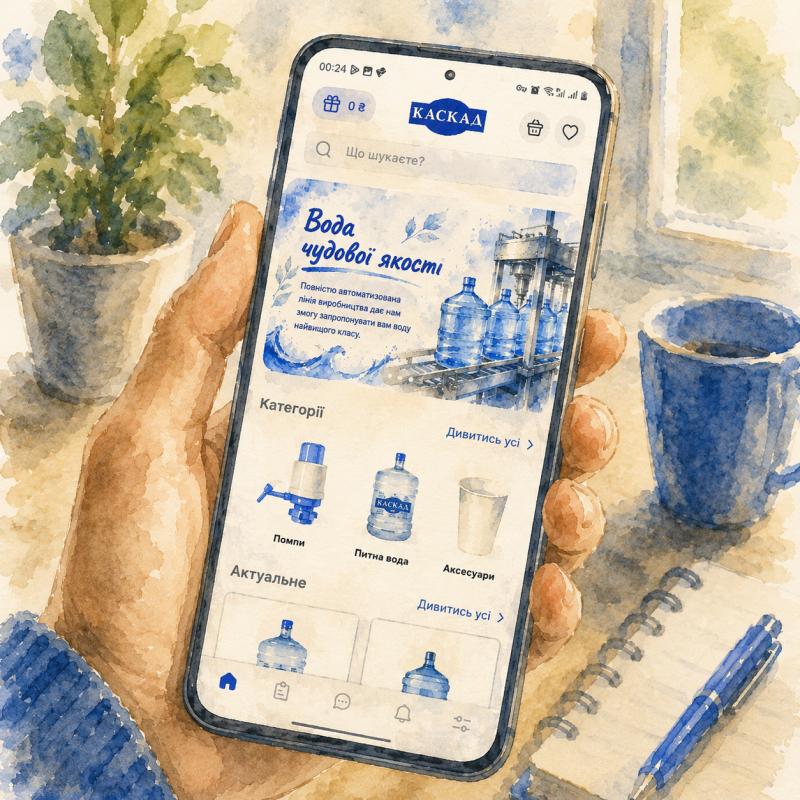
The bottling process is fully automated. The system includes washing and disinfecting containers, followed by filling them with purified water. This approach eliminates human error and ensures complete hygiene at every stage.
Thanks to cutting-edge technologies and strict quality control, Cascade drinking water meets the highest standards while retaining its natural taste and beneficial properties.
Conclusion
The history of water purification is a story of humanity’s care for health. From ancient times to the present day, methods of filtration and preparation have evolved to provide people with clean, safe water. Today, Cascade water embodies the best of modern technology, offering you health, comfort, and confidence in quality.