UKR
UKR
Articles, Water in Cooking and Life
The Secret to Perfect Pancakes: Why Water Matters More Than You Think
Feb
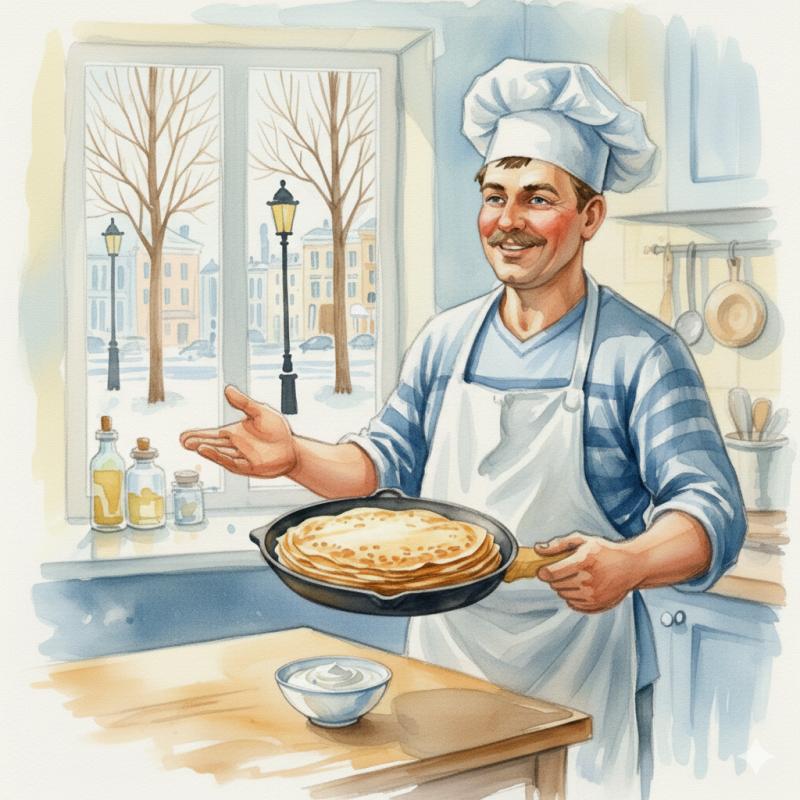
Maslenitsa smells like butter, honey, and… arguments about whose pancakes are better. We tweak proportions, swap frying pans, but rarely think about what we pour into the batter. That’s a mistake. Water isn’t just a “liquid”—it’s a full-fledged ingredient that determines whether your pancakes will be lacy or rubbery. Let’s figure it out without being boring, but with a bit of science and a couple of secret tricks.
Why Water Calls the Shots (Science in 30 Seconds)
In pancake batter, water does several important things:
- Hydrates the gluten. Flour proteins, when they meet water, form an elastic network. Too little water — pancakes are thick and dense; too much — thin and delicate.
- Conducts temperature. Warm water (36–40°C) wakes up yeast; boiling water “brews” the flour, making the batter pliable and elastic; cold water slows things down — sometimes that’s needed too.
- Sparkling water creates holes. The carbon dioxide bubbles in sparkling water are what turn a pancake into lace. It works every time.
- Hardness affects taste. Excess calcium and magnesium salts can give a metallic aftertaste. For pancakes, the ideal water is clean, soft, with balanced mineralization — no off-flavors.
By the way, we wrote about what else affects the taste of water in our article “Factors Affecting the Taste, Color, and Odor of Drinking Water”.
Three Recipes Worth Trying for Pancake Week
I’ve chosen three options: a basic one (forgiving of mistakes), a showy one (sparkling water), and a healthy one (buckwheat). All are designed for 4–6 people.
Recipe #1. Classic Pancakes (The Foolproof Kind)
The most reliable option for those who just want tasty pancakes without any fuss.
Ingredients:
- Wheat flour — 250 g
- Eggs — 2
- Warm water (35–40°C) — 350 ml
- Vegetable oil — 2 tbsp
- Sugar — 1 tbsp
- Salt — ½ tsp
- Baking powder — ½ tsp (optional, for light fluffiness)
Instructions:
- In a bowl, whisk the eggs with salt and sugar until lightly frothy.
- Add half the warm water, add the sifted flour, and mix well with a whisk until smooth.
- Add the remaining water and oil, and mix again. The batter should be runny, like heavy cream.
- Important: Let the batter rest for 15–20 minutes. This allows the gluten to relax, preventing the pancakes from tearing on the pan.
- Cook on a well-heated pan, greasing with oil as needed.
Water hack: For thin, lacy pancakes, replace 100 ml of plain water with sparkling water (also warm, but add the sparkling water at the very end).
Recipe #2. Lacy Pancakes with Sparkling Water (The Showstopper)
The kind of pancakes you see on social media — full of holes, thin, and elastic. The secret is the combination of boiling water and sparkling water.
Ingredients:
- Flour — 250 g
- Eggs — 3
- Milk — 250 ml
- Boiling water — 100–150 ml
- Sparkling water (cold) — 100 ml
- Vegetable oil — 2 tbsp
- Sugar — 1 tsp
- Salt — a pinch
Instructions:
- In a bowl, mix the flour, eggs, and milk until smooth.
- Slowly pour in the boiling water in a thin stream, whisking vigorously. The boiling water “brews” the batter, making it elastic.
- At the very end, add the sparkling water and oil. The batter will be very thin — that’s the point.
- Let it rest for 15 minutes and cook on a very hot pan, using just a little batter.
Why it works: The boiling water partially cooks the flour, and the sparkling water bubbles create pockets. Together, they give the perfect texture.
Recipe #3. Buckwheat Pancakes (For the Health-Conscious)
Buckwheat flour adds a nutty flavor and healthy fiber to pancakes. Perfect for savory fillings.
Ingredients:
- Buckwheat flour — 200 g
- Wheat flour — 100 g (can be substituted with any gluten-free blend)
- Eggs — 2
- Room temperature water — 450–500 ml
- Vegetable oil — 2 tbsp
- Salt — ½ tsp
Instructions:
- Mix both types of flour.
- In a separate bowl, whisk the eggs with salt and some of the water.
- Add the flour mixture, stir until smooth, then add the remaining water and oil.
- The batter should be slightly thinner than for regular pancakes — buckwheat flour absorbs a lot of moisture. If it seems too thick, add another 20–30 ml of water.
- Let it rest for 20 minutes and cook as usual.
Hack: Buckwheat pancakes are denser, so flip them carefully. The pan needs to be very hot.
Common Problems and Solutions
- Pancakes tear when flipped. The pan is probably not hot enough, or the batter is too thin. Add 1–2 tbsp of flour and let it rest for 10 minutes. Or just turn up the heat.
- No holes. Replace some of the water with sparkling water, or add a pinch of baking soda (if the batter contains kefir or sour milk).
- Rubbery pancakes. Too many eggs or over-mixing with an electric mixer. The ideal is 2–3 eggs per 500 ml of liquid and just a whisk — no mixers.
- Chlorine or metallic taste. This means your tap water isn’t great. Use bottled water — for example, “Cascade Energy” with its soft taste and balanced mineral composition.
Party Tips (For a Crowd)
If you’re planning to make pancakes for 10–20 people, prepare in advance.
- Water supply. For 20 guests, you’ll need at least 15–20 liters of clean water (drinking, cooking, washing dishes). Better to have 25–30 liters as a buffer. For more details on calculating needs for your family, check out our article “Guide to Calculating Your Family’s Drinking Water Consumption”.
- Temperature matters. You need hot water (above 60°C) for washing dishes, and cool water for drinking. If you’re celebrating outdoors, keep your water supply out of the sun.
- Yeast pancake batter is best made the night before. Let it rest in the fridge, then take it out to warm up in the morning.
Summary
The perfect pancake isn’t just about skill — it’s about the right ingredients. The water you use for your batter should be clean, soft, and good-tasting. That’s exactly what we put into our “Cascade” bottles — feel free to use it for pancakes, for tea, or just for the joy of it. And if you want to dive deeper into the topic, read about our water purification process — we’re sure you’ll find it interesting.