UKR
UKR
Articles, Cognitive about Water
The Element of Water: From Ancient Beliefs to the Present Day
Mar
Water in our lives is something so familiar that we rarely think about its deeper meaning. You turn on the tap—and it flows. But for our ancestors, everything was different. Water was alive, mysterious, and powerful. It could heal, and it could destroy. They worshipped it, appeased it, and told legends about it. Let’s embark on a journey through the world of water traditions in the Black Sea region—from ancient pagan rites to the holidays we know today.
Spirits of Rivers and Wells: Pre-Christian Beliefs
Long before Christian prayers were heard on these lands, people believed that every body of water had its own master. The Vodianyk—a male spirit who could help fishermen or, conversely, drag an unwary swimmer to the bottom. And in the darkness of night by the water, rusalki would dance in circles—not so much the half-women, half-fish from fairy tales, but rather nature spirits associated with fertility and moisture.
These beliefs were not just scary stories. They served an important practical function: teaching people to respect the water element. Don’t make noise by the river at night, don’t throw trash into springs, don’t swim in forbidden places. Break the taboo—anger the spirit. Essentially, these were ancient safety rules wrapped in the form of legends.
Springs and wells were especially revered. People brought them offerings—wreaths, bread, ribbons. It was believed that water from such a place had special power. Later, with the arrival of Christianity, many springs were “rechristened,” named after saints. Thus appeared “holy springs,” where people still come for water and healing. We wrote about how to properly collect and store water from such springs in the article “How to Properly Store Drinking Water”.
Two Holidays in One: Ivan Kupala and John the Baptist
Perhaps the most striking example of intertwined traditions is the holiday popularly known as Ivan Kupala. Here, everything is mixed: ancient solar rites and the Christian memory of a great prophet.
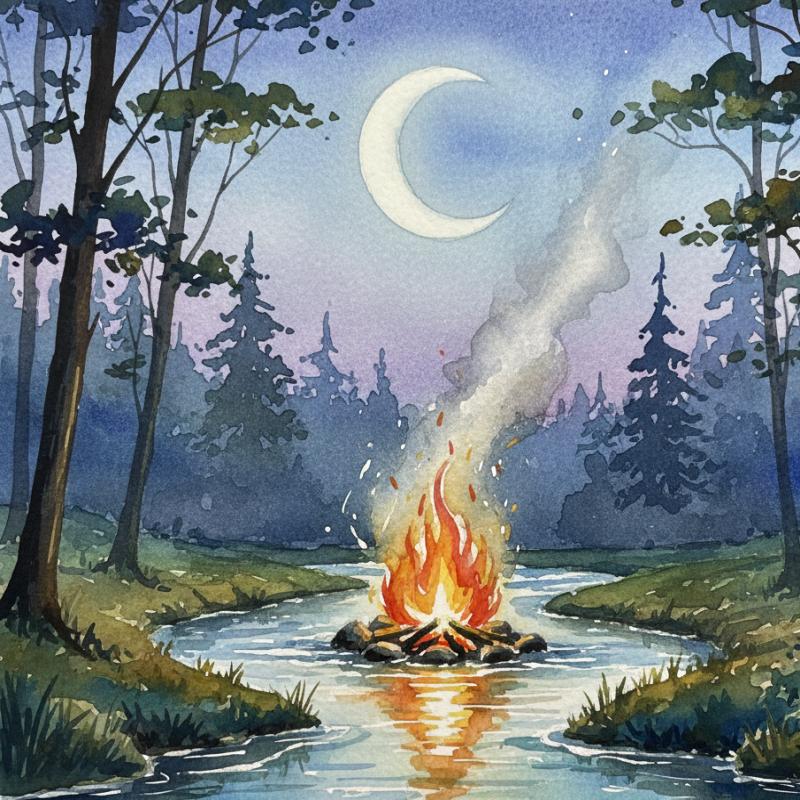
The Pagan Layer: Our ancestors celebrated the summer solstice—a time of nature’s blossoming, the longest days, and the shortest nights. It was believed that on this night, water and fire acquired a special, purifying power. Hence the main rites: jumping over bonfires (purification by fire) and mass bathing (purification by water). Girls wove wreaths, set them afloat on the water, and told fortunes about their betrothed. They also believed that on this night, the fern blossoms—and whoever finds its flower will gain incredible happiness.
The Christian Layer: In the church calendar, on these same days (June 24 according to the New Julian calendar used by the Orthodox Church of Ukraine) falls a great holiday—the Nativity of John the Forerunner and Baptist. This is the same saint who baptized Jesus Christ in the waters of the Jordan. He lived the life of an ascetic in the desert, called people to repentance, and prepared them for the coming of the Savior. As explained by the Orthodox Church of Ukraine, Christians have no saint named “Kupala”; the folk name arose because John baptized with water.
The Church has repeatedly emphasized that Kupala rites—fortune-telling, jumping over bonfires—are echoes of paganism and have no connection to the veneration of the prophet John. Nevertheless, in the popular consciousness, these two holidays have firmly merged, creating a unique cultural fusion that lives on to this day.
The Great Blessing of Water at Epiphany
Another important water holiday that almost everyone knows is Theophany (Epiphany)—on January 19 according to the Julian calendar for those churches that follow it, or January 6 according to the New Julian. On this day, churches perform the rite of the Great Blessing of Water—holy water.
Believers draw the blessed water into vessels and keep it at home as a shrine. There is also the tradition of immersing oneself in an ice hole—the “Jordan.” For many, this is a symbol of spiritual and physical purification, although the Church reminds that the ritual of bathing itself does not “wash away” sins—it is merely a folk tradition that requires a sober approach and preparation. We talked in detail about what safe water for bathing should be like in the material “Water Just in Case: Building Your Reserve Without the Rush”.
Maritime Traditions of Odesa and the Black Sea Region
Here, on the Black Sea coast, water is not just a resource but a part of identity. For fishermen and sailors, it has always been both a provider and an element demanding respect. Old customs have been preserved: blessing boats before going out to sea, commemorating those who never returned from voyages, and predicting storms by special signs.
In Odesa and the region, traditions connected with water are still alive. For example, in the village of Ahafiivka, where Boyko settlers from the Carpathians live, they still wash their faces in the icy river on Christmas Eve, “to get healthy and not be sick.” They also wash in a vessel with coins, “so that money and health are as abundant as water.” These rituals are a living thread connecting us with our ancestors.
Healing Springs and Modern Festivals
In the Black Sea region, there are many springs to which folk rumor ascribes healing properties. Often such places are associated with legends about saints or miracle-workers. People come there with prayer, fill bottles with water, and wash themselves. From a scientific point of view, the water in such springs may not have a unique composition, but faith and the ritual itself often work wonders—if only because they give a person hope and solace.
In the 21st century, interest in folk traditions has not faded but has taken on a new form. Festivals for Ivan Kupala, ethnographic celebrations, theatrical performances on the seashore gather thousands of city residents and tourists. Of course, a modern festival is often a simplified, “staged” version of the ancient rite. But the main thing is that it allows us to touch history, feel a connection with our ancestors, and simply have a good time by the water.
How to Participate in Rituals Respectfully
If you decide to join folk festivities or visit a holy spring, remember the simple rules of respect for tradition and nature:
- Don’t litter. Leave the place as clean as it was before you. Water does not tolerate dirt.
- Observe prohibitions. If a sign at a spring says “Do not swim” or “Take water only from this tap,” there are reasons for it.
- Be careful. Don’t dive in unfamiliar places, don’t swim while intoxicated, watch your children.
- Respect the feelings of believers. If you come to a Christian holiday, do not disturb those praying, do not behave provocatively.
- Learn the meaning of the rituals. Before participating, ask locals or organizers what a particular action means. This shows respect for the culture.
Water unites us all—ancient pagans, modern Christians, and simply people who love to relax by the sea. It remains the element that gives life, cleanses, and inspires. And we at “Cascade” ensure that the water you drink every day is as pure and life-giving as in the ancient legends. Cherish water and respect it—and it will reward you with health and joy.